The boundary between logistics and manufacturing has steadily blurred over the past decade. What were once two separate operational domains are now deeply intertwined, working together to create faster, more responsive, and more efficient supply chains.
This integration is not just a trend—it reflects a fundamental shift in how businesses think about production and delivery. Companies are no longer focused solely on making products; they are equally concerned with how those products move, how quickly they reach customers, and how reliably the entire system performs.
The Evolution of Manufacturing and Logistics
Manufacturing used to operate independently from logistics, with production teams focusing on output while logistics handled distribution. That separation often led to inefficiencies, including overproduction, delays, and excess inventory. Today, the two functions operate in tandem. To better understand how manufacturing processes have evolved, this in-depth explanation of manufacturing systems highlights the role of coordination and efficiency in modern production environments.
From Linear Processes to Integrated Systems
Instead of a linear flow, modern operations resemble interconnected systems where manufacturing schedules are directly influenced by logistics capabilities. Materials arrive just as they are needed, and finished goods are dispatched with minimal delay. This level of coordination reduces waste and improves responsiveness across the entire supply chain.
Real-Time Data Driving Smarter Decisions
One of the most significant changes in recent years is the use of real-time data to guide both manufacturing and logistics decisions. Sensors, tracking systems, and analytics platforms provide continuous insights into operations. These tools allow businesses to adjust production schedules, reroute shipments, and respond to disruptions as they happen rather than after the fact.
Visibility Across the Supply Chain
End-to-end visibility ensures that every stage of the process is aligned. Managers can see where materials are, how production is progressing, and when shipments will arrive. This transparency helps prevent bottlenecks and keeps operations running smoothly.
The Importance of Precision in Industrial Logistics
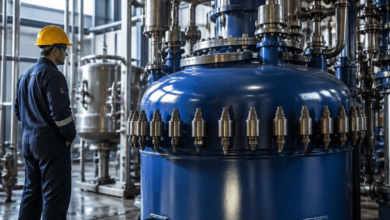
Industries such as oil, gas, and heavy manufacturing require an especially high level of precision. Even minor delays or inaccuracies can disrupt production and lead to significant financial losses. For example, advancements in process control and monitoring—like those discussed in this case study on refinery system integration—demonstrate how tightly logistics and production must align to maintain efficiency in complex environments.
Coordinating Complex Operations
In these settings, logistics is not just about transportation. It involves synchronizing equipment, materials, and schedules to ensure continuous operation. This level of coordination requires both advanced technology and experienced management.
The Role of Skilled Logistics Teams
Behind every efficient supply chain is a team that understands how to manage complexity. While technology plays a major role, human expertise remains essential in interpreting data, making decisions, and adapting to unexpected challenges.
Experience Meets Strategy
Experienced logistics professionals bring a deep understanding of routing, compliance, and cost optimization. They know how to balance efficiency with flexibility, ensuring that operations remain stable even when conditions change.
Businesses looking to strengthen their logistics capabilities often rely on experienced providers such as the team at Bear Down Logistics, whose approach reflects the importance of combining operational knowledge with adaptable solutions tailored to specific industries.
This combination of expertise and flexibility often determines how effectively a supply chain performs under pressure.
Technology as the Connecting Layer
Technology serves as the bridge between manufacturing and logistics. Without it, coordinating complex operations across multiple locations would be nearly impossible.
Automation and Synchronization
Automated systems ensure that production and logistics processes remain synchronized. For example, when inventory levels drop below a certain threshold, systems can automatically trigger replenishment orders and adjust production schedules. This reduces the risk of shortages and keeps operations running efficiently.
Advanced Planning Systems
Planning software allows businesses to simulate different scenarios and optimize their strategies. These tools help identify potential risks and provide solutions before problems arise. As a result, companies can operate with greater confidence and precision.
See also: Maximizing Business Efficiency With Financial Systems 3384903643
Balancing Efficiency and Resilience
Efficiency has long been a primary goal in logistics and manufacturing, but recent disruptions have highlighted the importance of resilience. Companies are now focusing on building systems that can withstand unexpected challenges.
Flexible Supply Chain Models
Businesses are adopting flexible models that allow them to adjust quickly to changing conditions. This may involve diversifying suppliers, maintaining safety stock, or using multiple transportation routes. These strategies help reduce the impact of disruptions and ensure continuity.
Preparing for Uncertainty
Uncertainty is an inherent part of global supply chains. Companies that plan for it are better equipped to maintain performance and meet customer expectations. This proactive approach is becoming a defining characteristic of successful operations.
Sustainability in Integrated Systems
Sustainability is increasingly influencing how logistics and manufacturing systems are designed. Businesses are looking for ways to reduce waste, lower emissions, and improve resource efficiency.
Optimizing Resource Use
Integrated systems make it easier to identify areas where resources can be used more efficiently. For example, aligning production with demand reduces excess inventory and minimizes waste.
Similarly, optimized transportation routes lower fuel consumption and emissions.
Long-Term Benefits
Sustainable practices often lead to cost savings over time. By reducing waste and improving efficiency, companies can achieve both environmental and financial benefits. This alignment makes sustainability a practical as well as ethical priority.
Conclusion
The integration of logistics and manufacturing represents a significant shift in how businesses operate. By aligning production with distribution, companies can create systems that are not only efficient but also adaptable and resilient.
As technology continues to advance and supply chains become more complex, this unified approach will play an increasingly important role in shaping the future of global commerce. Organizations that embrace this integration will be better positioned to meet evolving demands and maintain a competitive edge.