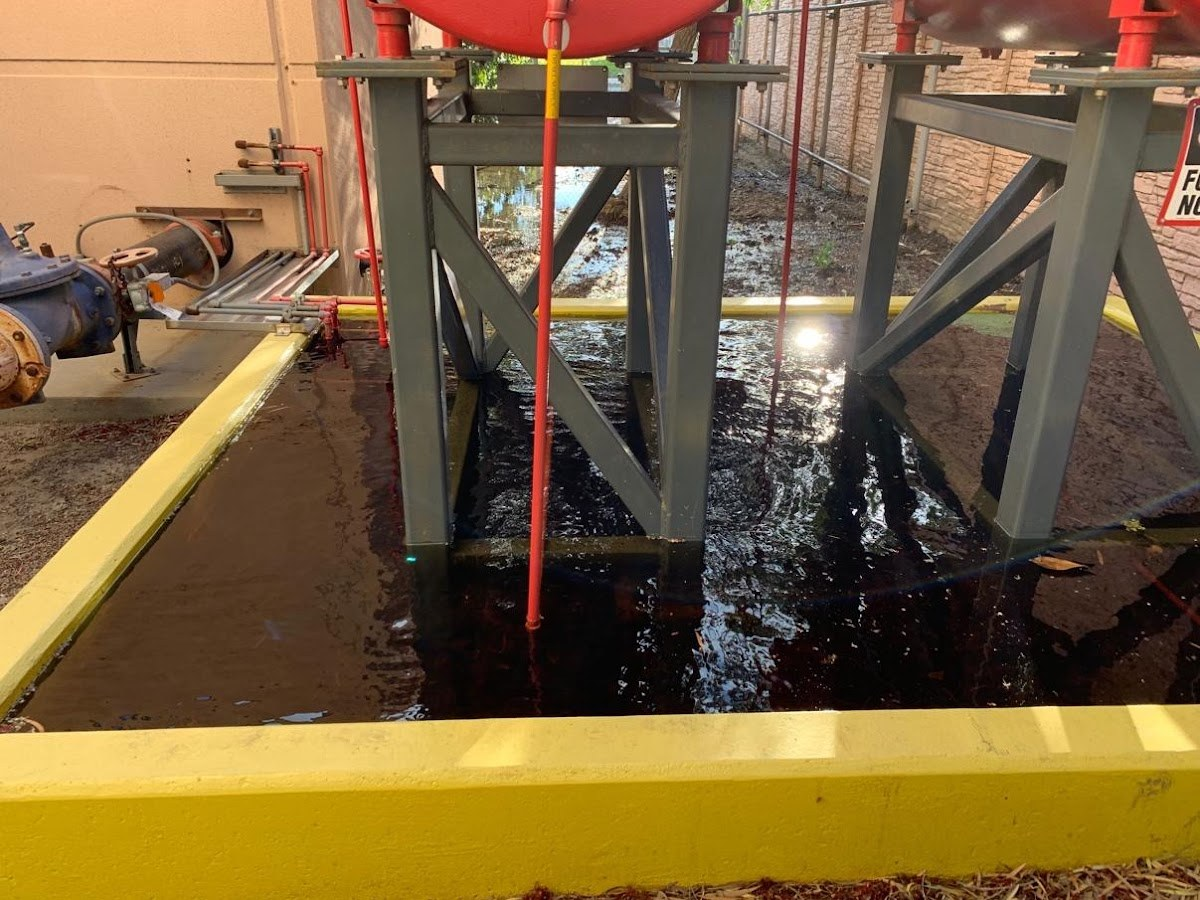
Every site that stores oil, fuel, or chemicals eventually deals with a leak. A gasket fails, a forklift tine punctures a drum, a hose coupling lets go halfway through a transfer. The tank or container is the primary containment. Secondary containment is the backup: a barrier that catches whatever escapes before it reaches soil, storm drains, or groundwater.
Why It Matters
A small release that stays inside a berm is a cleanup job. The same release reaching a drainage ditch can become an environmental incident, a regulatory report and a long remediation project. Containment also protects workers by keeping flammable or corrosive liquids from spreading across walkways and into equipment areas.
Regulation is the other driver. In the United States, facilities that store oil above certain quantities, and could reasonably discharge it to waters, may fall under the federal Spill Prevention, Control, and Countermeasure rule. The EPA’s oil spill prevention and preparedness regulations explain who is covered and what a plan must include. Hazardous waste rules, fire codes, and state programs can add their own requirements.
See also: Wearable Technology: The Future of Fitness
Containment Options
Berms and Dikes
Permanently dikes built from concrete, steel, or lined earth surround tank farms and large aboveground tanks. Portable berms with collapsible or foam-filled walls suit temporary storage, maintenance work, and truck loading where a fixed structure is impractical.
Spill Pallets and Decks
For drums and totes, spill pallets and modular decks place a sump beneath a grated platform. Polyethylene units resist many chemicals; steel units handle heavier loads and are often preferred for flammables.
Double-Walled Tanks and Curbing
Double-walled tanks build containment into the tank itself. At transfer points, curbed concrete pads, trench drains feeding sumps, and drip pans under hose connections deal with the routine drips that happen every time product moves.
Sizing: The 110% Rule of Thumb
A common rule of thumb is to size containment to hold at least 110% of the largest single container inside it. The extra margin is generally meant to allow for rainwater collecting in outdoor areas. When several tanks share one dike, subtract the volume that the other tanks and their supports occupy below the dike wall height. Exact requirements vary by substance and jurisdiction, so treat 110% as a starting point and confirm the rule that applies to your site.
Liners and Coatings
Containment only works if the floor and walls are impermeable to what they hold. Bare concrete is porous, cracks over time, and is attacked by many chemicals. Common upgrades include HDPE and other geomembrane liners, epoxy systems (with novolac epoxies for aggressive chemicals), and spray-applied polyurea, which cures quickly and bridges minor cracks.
Whatever you choose, check the manufacturer’s chemical resistance data against the products actually stored. Joints, pipe penetrations, and the transition between floor and wall are where failures tend to start, so they deserve extra attention. When designing secondary spill containment, many facilities select the liner or coating around the most aggressive chemical on site, then build every other detail around that choice.
Building an Inspection Routine
- Look on a schedule. Check tanks, fittings, and containment for stains, sheen, corrosion, or damage at set intervals.
- Manage rainwater. Keep drain valves closed and locked, and check collected water for sheen or odor before releasing it.
- Check the barrier. Look for cracks, coating wear, blistering, and gaps around pipes.
- Keep it clear. Debris and stored items reduce capacity.
- Write it down. Dated logs reveal trends and support compliance.
Closing Thoughts
Good secondary containment is mostly unglamorous: correctly sized barriers, compatible materials, and steady inspection. Get those three right, and a leak stays a minor maintenance task instead of a reportable event.